Griaule researcher explains ‘standard palm formula’

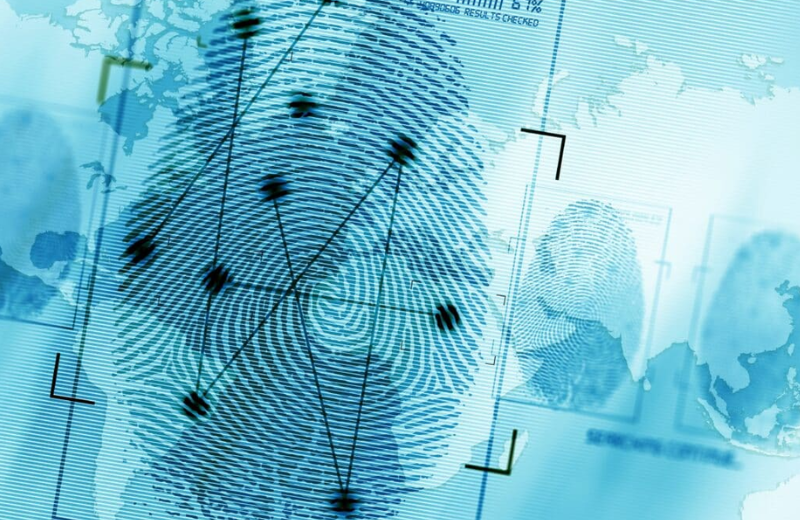
Palm prints are discovered at between 25 and 30 percent of all crime scenes, researchers estimate, but are rarely used in criminal investigations. This is largely due to the lack of standardization in the way the biometric data is handled, leading a researcher with Griaule and a colleague to create a “standard palm formula” to enable investigative comparison.
The work of Angela Tonietto of the latent print unit within the Civil Police of the Federal District of Brasilia and Griaule Researcher Jemima de Jesus Santos is detailed in the study “Patterning in the Distal Portions of the Palms as a Key to Palm Print Identification.” The study has been published in the International Association for Identification’s (IAI’s) Journal of Forensic Identification.
Standardization can make palm biometrics far more useful for forensic investigations around the world, Santos told Biometric Update in an email.
The researchers collected 4,000 palmprints from subjects in Brazil, and examined the statistical relationships between pattern type, location and hand, highlighting differences and similarities. They found common pattern arrangements associated with both hands, and others associated with a single hand.
Ultimately, they found that using this pattern frequency data, automated biometric systems and forensic investigations alike can improve both the precision and reliability of palm print identification.
Bringing palms closer to fingers
“The proposal of a ‘standard palmar formula’ demonstrates strong potential for global applicability, as it is based on morphological structures inherent to human anatomy and common across all populations,” Santos explained to Biometric Update. “By focusing on the distal segment of the palm — including the digital bases (B1–B5) and the interdigital intervals (VP I–IV) — the model enables the consistent, replicable description, comparison, and codification of patterns.”
Currently, palm prints are generally treated “merely as images,” she says, a limitation that the research contributes significantly to overcoming.
“Through a structured and codifiable approach, systems such as ABIS from Griaule can evolve beyond simple image repositories into datasets organized by patterns. By enabling the indexing of palmar regions based on the frequency and arrangement of patterns, the system can significantly improve search efficiency, candidate prioritization, and diagnostic interpretation, particularly in cases involving partial or low-quality palm prints. Accordingly, this represents an important step toward expanding the use of palm prints in automated systems and advancing this field to a level of organization comparable to that already achieved in fingerprint analysis.”
Griaule’s experience in fingerprint biometrics include operational deployments in its home country of Brazil and across the Americas, in addition to participation in evaluations like NIST’s ELFT.
Organization, objective criteria and operational applicability
The greatest challenge for the researchers came once they had obtained the data, in organizing the complexity of the palm print biometrics, Santos says.
“The palm region, especially the area between and just below the fingers, presents a wide variety of patterns and combinations, including different types of structures, transitions, and overlapping arrangements,” writes Santos. “Transforming this variability into a clear, consistent, and reproducible classification system required not only its organization, but also the definition of objective criteria for pattern recognition, as well as the delimitation of logical units of analysis, namely the digital bases (B1–B5) and the interdigital intervals (VP I–IV).”
Developing the “standard palm formula” also required the researchers to distinguish “between theoretically possible combinations and those actually observed in the population, recognizing the difference between what is possible in theory and what most frequently occurs in practice. This made it possible to develop a model that is not only conceptual, but also operational and applicable in everyday forensic work. In addition, the lack of standardized references in the literature required the development of an approach that is both scientifically grounded and practically functional.”
Having met the central challenge of the research by translating the morphological complexity of palms “into a structured, codifiable, and scalable model,” Santos argues the research establishes stronger scientific grounds for forensic analysis, and supports future automated palm biometrics systems.
This content was published on the Biometric Update portal on March 20, 2026, and can be accessed at this link.